In-Service Training
Focused sessions for HR, supervisors, team leaders, and employees—including De-Escalation & Conflict Resolution. Tailor instruction to your team’s roles and everyday interactions.
Train at your workplace. Build a practical plan. Prepare your people to respond.
Hot Shots Shooting Center & Training Academy, located in Ashland, Ohio, is the founder of the Community Safety Readiness & Emergency Response Initiative (CSRERI). We deliver training at your business facility, at Hot Shots, or through a combination of both—based on your organization’s needs.
Your workplace has its own people, routines and responsibilities. We help you identify readiness gaps, create or update practical guidelines, and prepare your team with clearer roles and practiced skills.
Start with a focused session or build a broader readiness program. We’ll work with you to tailor a practical plan around your organization’s needs and available budget.
Begin with one concern or build on an existing program. We will discuss your priorities, participants, location, and scheduling needs before recommending a scope of work.
Focused sessions for HR, supervisors, team leaders, and employees—including De-Escalation & Conflict Resolution. Tailor instruction to your team’s roles and everyday interactions.
Prepare your people in situational awareness, recognizing warning signs, reporting concerns, communication, and understanding assigned responsibilities.
Prepare your team in emergency communication, evacuation, employee accountability, and medical response. Connect written procedures with practical instruction and exercises.
Review your facility and operations through a walkthrough and debrief. Receive identified concerns, prioritized recommendations, and practical steps to strengthen readiness.
We also assist with creating, reviewing, or updating Safety Readiness Policy & Procedure Guidelines, including reporting, communication, evacuation, medical response, and escalation procedures.
The person at reception, the employee working at a machine, and the team behind a closed meeting-room door may experience the same emergency very differently. A shared plan connects them.
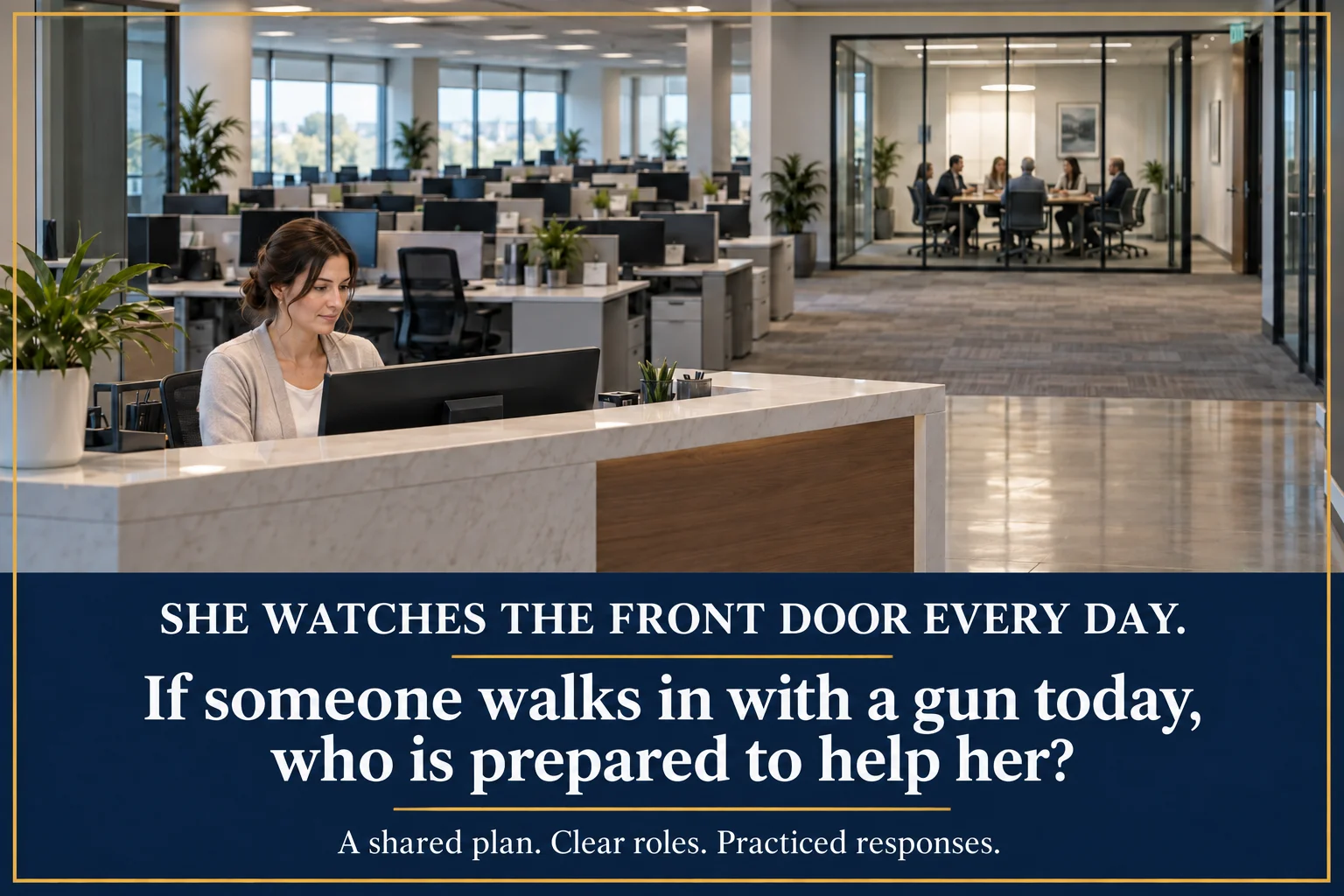
Discuss who reports a concern, how others are alerted, and who takes responsibility when immediate help is needed.
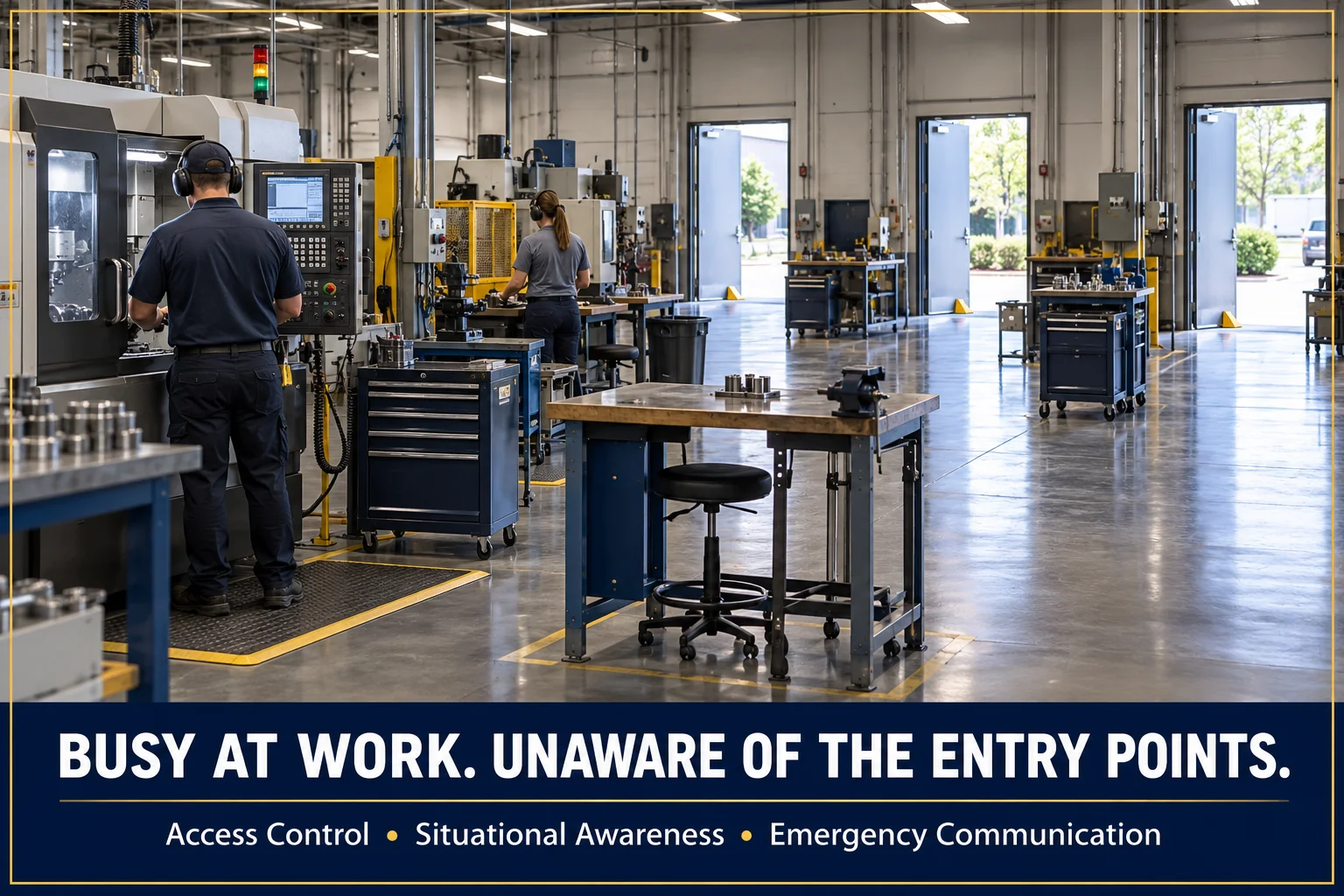
Include access points, work areas, hearing protection, communication methods and employees who may not notice a developing situation.
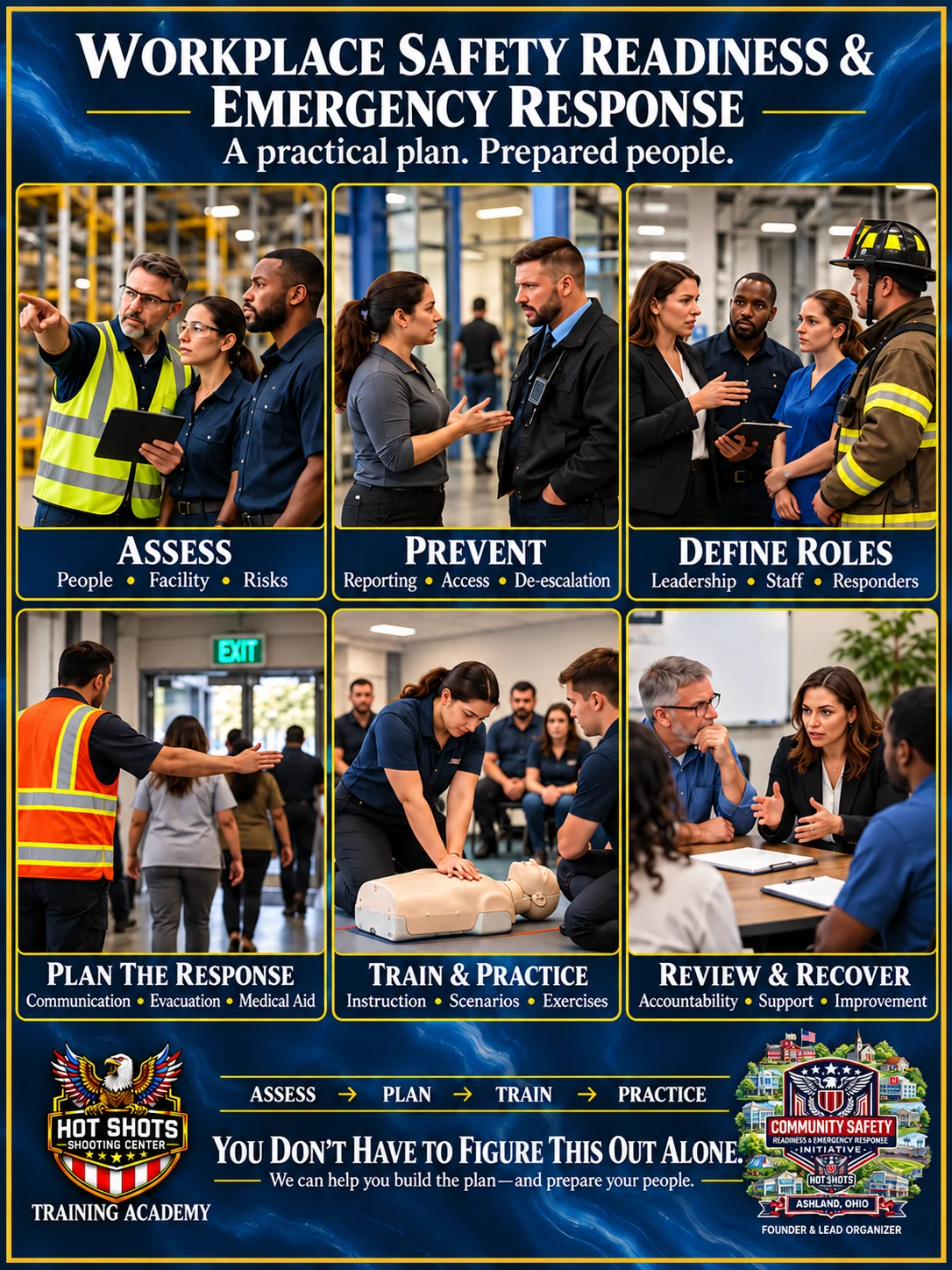
Illustrative training scenarios; not photographs of a specific client facility.
Topics, delivery and practice are selected around the agreed needs of your organization. Available course formats and any certification requirements are confirmed during planning.
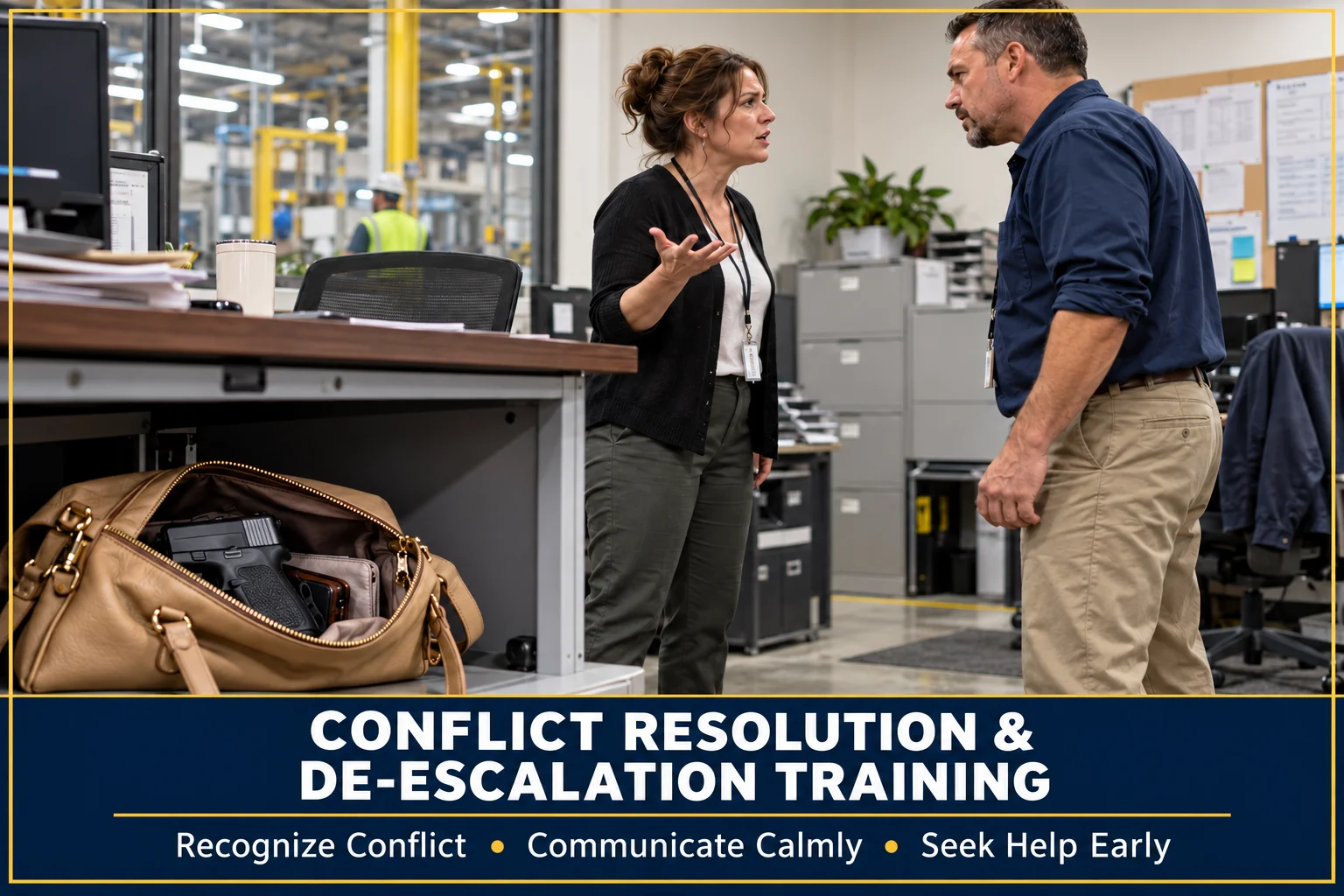
Does your company permit employees to carry? Whether you have a policy, need to clarify one, or are starting from scratch, prepare your people to address a concern.
The disagreement in this illustration also raises questions about escalating conflict, warning signs, and reporting concerns—even when carrying is permitted.
We help you turn written guidelines into practiced workplace readiness.
Discuss Your Workplace Readiness NeedsPractical training for HR, supervisors, team leaders, and employees.
Prepare your people to recognize rising tension, communicate calmly, set boundaries, navigate difficult interactions, and know when to seek additional support.
Connect instruction to difficult employee conversations, coworker disputes, upset customers, and addressing workplace-policy concerns. Schedule a focused session at your workplace, or include it in a broader safety readiness program.
Walkthroughs, guideline development, staff education and practice grounded in your own environment.
Instructor-guided training and MILO scenario-based practice can support awareness, judgment, communication and team response.
Bring facility-specific planning together with focused instruction, exercises and continued development. Discuss shift patterns and group needs with us.
01 · Assess
Understand existing strengths, concerns and readiness gaps.
02 · Plan
Define responsibilities and practical procedures.
03 · Train
Prepare leadership, staff and assigned personnel.
04 · Practice
Exercise the plan, debrief and identify improvements.
Ask about up to $2,400 in available CSRERI subsidy funding to help offset training fees. Funding details and proposed training scope are discussed during your consultation.
Considering employee carry—or reviewing a no-firearms policy? Start with a clear discussion of your environment, responsibilities and broader safety plan.
HSSC can provide a readiness and training perspective on role selection, judgment, de-escalation, firearm handling, qualification needs, emergency communication and continued development.
Your organization makes its policy decisions. Review applicable law, employment policies and insurance considerations with your attorney and insurance provider. A concealed-carry license alone does not resolve every workplace-policy question.
No. Start by discussing the specific help you need. The proposed scope can focus on a walkthrough, guideline assistance, selected training topics or a broader development plan.
Yes. We can help review or update existing guidelines and prepare people to understand and practice their responsibilities.
No. Awareness, reporting, communication, conflict resolution, evacuation and medical readiness serve organizations regardless of their firearms policies.
Discuss your goals, staff roles, facility and operational needs during the consultation. Confirm delivery, participants, timing and investment before scheduling work.
Tell us about your organization, your concerns, and what you already have in place. We will help you consider a workable starting point.